
5 Holiday Lighting Mistakes (And How to Avoid Them)
If you’ve ever stood on a ladder in the freezing cold — tangled in wires or fixing a half-lit house — you know DIY holiday lighting can quickly go sideways. The good news? Most problems are totally avoidable if you know what to watch for.
Here are the five most common mistakes homeowners make — and how to avoid them to get a clean, pro-level look on your first try.

1. Using Big-Box Store Lights That Aren’t Built to Last
Those pre-packaged light kits from big-box stores are tempting — cheap, plug-and-play. But pros steer clear for good reasons.
Most store-bought lights use thin PVC wire with weak weather resistance. After just a snowfall or two, you might face corrosion or cracking wires. Plus, their one-piece design means if a single bulb or fuse fails, the entire line goes dark. You’re also stuck with fixed lengths and bulb spacing — which rarely fits your roofline perfectly.
Instead, opt for SPT-1 or SPT-2 wire with C7 or C9 socket strings and replaceable LED bulbs. Here’s the difference:
SPT-1: thinner insulation (0.03”) and slightly cheaper
SPT-2: thicker insulation (0.045”) and built to last in colder, wetter climates
2. Running Too Many Extension Cords
Chaining together extension cords to reach different parts of your house isn’t just messy — it’s unsafe. It creates trip hazards, risks overload or fire, and looks unprofessional.
The better way? Build custom runs using bulk SPT wire and add vampire (slip-on) plugs exactly where you need them. This setup starts and ends power where it makes sense — no extra cords, no guesswork.
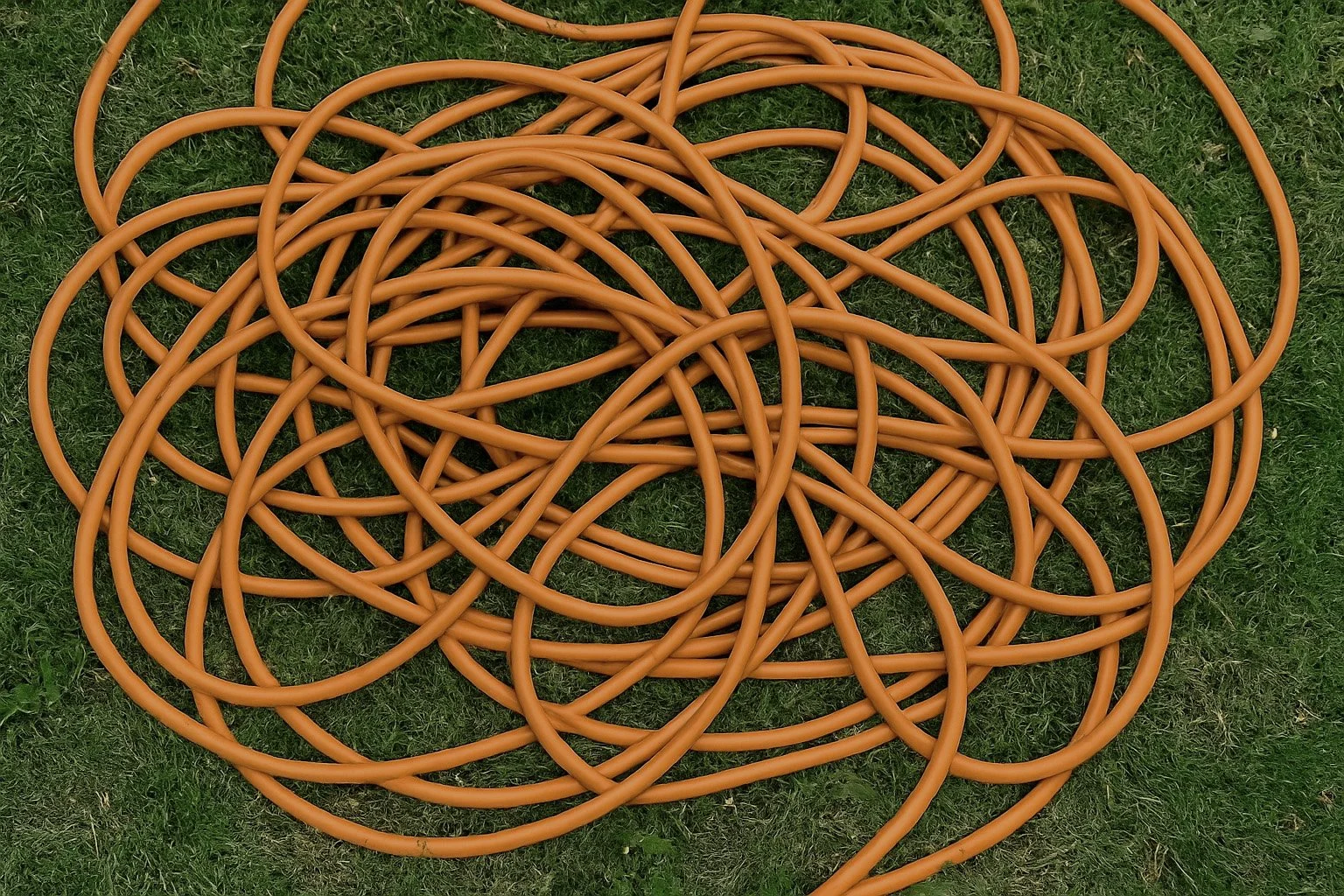
“Chaining together extension cords to reach different parts of your house isn’t just messy — it’s unsafe. It creates trip hazards, risks overload or fire, and looks unprofessional.”
3. Overloading Your Circuits
LED lights draw far less power than traditional incandescent bulbs — but that doesn’t mean you can run unlimited strands on a single plug. A standard 15-amp household breaker supports about 1,800 watts. A single C9 LED bulb uses roughly 0.58 watts — meaning, in theory, you could run thousands on one circuit. But for safety, keep your load under 80% capacity.
Mixing incandescent and LED lights or ignoring limits can easily trip GFCIs and cause outages.
To avoid issues, use LED bulbs, know your amperage limits, split runs across multiple circuits, and test with a kill-a-watt meter or by calculating total wattage before you start.
4. Improper Mounting — Staples, Nails, or Tape
This is a big no-no. Many homeowners use staples, duct tape, or makeshift hooks that damage wires or surfaces. Staples can pierce wire insulation — causing shorts — while tape fails in cold or wet conditions.
The professional solution is to use roofline clips, gutter clips, or shingle tabs designed for holiday lighting. They hold up to weather and won’t damage your home.
5. Winging It Without a Plan
If your approach is grabbing a few boxes and climbing the ladder — you’ll likely end up with uneven spacing, lights running out before you finish, or awkward blank spots.
Instead, plan your project first. Walk the property, measure rooflines, and sketch a simple layout or mark it up on a photo. Calculate how many sockets and bulbs you’ll need to fit your exact dimensions.
Pro tip: A 100-foot bulk roll of SPT wire gives you total control and flexibility.
Bonus — Don’t Learn These the Hard Way
Sounds like a lot? That’s because it is when you’re figuring it out alone. That’s why I created a DIY Holiday Lighting Course that walks you through everything step-by-step.
You’ll get a full install walkthrough (video + text), a pro-vetted materials list with a 15% discount code, access to a private chat for questions, and for early signups, a personalized lighting design for your home.
Next Step
Ready to avoid these mistakes and light your home like a pro? Download my free Holiday Lighting Starter Guide — it’ll help you plan your project and pick the right materials before you spend a dime.
